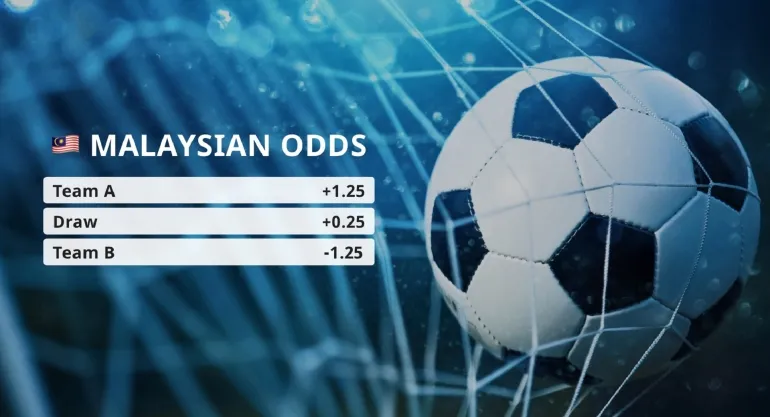
Malaysian Odds 2026 — Local Odds Format & Conversion Guide
"Malaysian odds" is a specific odds format used historically by Asian sportsbooks targeting Malaysian players — distinct from decimal odds (the global standard), Asian Handicap odds (the Asian market dominant format), and Hong Kong odds. While modern Tier 1 operators predominantly display decimal and Asian Handicap formats, Malaysian odds remain a toggleable display option and appear in older betting forums and agent communications. Understanding what Malaysian odds mean, how to convert them, and why most analytical bettors switch to decimal format is essential for any serious Malaysian sports bettor in 2026. This complete guide covers the Malaysian odds format, conversion math, when each format is used, and best practices for reading lines on the leading online betting Malaysia platform.
What This Guide Covers
- What Malaysian odds actually are
- Positive vs negative Malaysian odds
- Converting Malaysian odds to other formats
- Implied probability from Malaysian odds
- Malaysian odds vs decimal vs Asian Handicap vs Hong Kong
- When Malaysian odds are still used
- Why most bettors default to decimal odds in 2026
- FAQ — Malaysian odds questions answered
What Malaysian Odds Actually Are
Malaysian odds are a localised odds format historically used by Asian sportsbooks serving Malaysian and Southeast Asian players. The format expresses the relationship between stake and potential profit in decimal form, with positive numbers indicating one structure and negative numbers indicating another.
Mathematically, Malaysian odds and decimal odds are equivalent — they describe the same underlying probability and payout, just using different notation. The choice of format is a display preference that doesn't change the underlying betting math. However, conversion between formats can be confusing for new bettors who haven't seen Malaysian odds before.
Positive vs Negative Malaysian Odds
Malaysian odds use both positive and negative values, with the sign indicating whether you're staking more or less than 1 unit to win 1 unit.
Positive Malaysian Odds (e.g. 0.85)
Positive odds mean: stake 1 unit to win [positive value] units profit. So 0.85 Malaysian odds means stake RM 100 to win RM 85 profit (total return RM 185).
Conversion to decimal: Decimal = Positive Malaysian 1. So 0.85 Malaysian = 1.85 decimal odds.
Negative Malaysian Odds (e.g. -0.85)
Negative odds mean: stake [absolute value] units to win 1 unit profit. So -0.85 Malaysian means stake RM 85 to win RM 100 profit (total return RM 185 on the RM 85 stake).
Conversion to decimal: Decimal = (1 ÷ |Negative Malaysian|) 1. So -0.85 Malaysian = (1 ÷ 0.85) 1 = 1.1765 1 = 2.1765 decimal odds.
The Practical Distinction
Positive Malaysian odds appear on the underdog side of a market (you're staking less and winning more, in proportion). Negative Malaysian odds appear on the favourite side (you're staking more and winning less, in proportion). The format mirrors the same favourite/underdog asymmetry as American moneyline odds but uses different notation.
Converting Malaysian Odds to Other Formats
| Malaysian Odds | Decimal | Hong Kong | American |
|---|---|---|---|
| 0.50 | 1.50 | 0.50 | -200 |
| 0.75 | 1.75 | 0.75 | -133 |
| 0.85 | 1.85 | 0.85 | -118 |
| 0.95 | 1.95 | 0.95 | -105 |
| 1.00 / -1.00 | 2.00 | 1.00 | 100 / -100 |
| -0.95 | 2.0526 | 1.0526 | 105 |
| -0.85 | 2.1765 | 1.1765 | 118 |
| -0.75 | 2.3333 | 1.3333 | 133 |
| -0.50 | 3.0000 | 2.0000 | 200 |
Conversion Formulas
- Positive Malaysian to Decimal: Decimal = Positive Malaysian 1
- Negative Malaysian to Decimal: Decimal = (1 ÷ |Negative Malaysian|) 1
- Decimal to Positive Malaysian (when Decimal < 2.00): Positive Malaysian = Decimal − 1
- Decimal to Negative Malaysian (when Decimal > 2.00): Negative Malaysian = −1 ÷ (Decimal − 1)
Implied Probability From Malaysian Odds
Just like other odds formats, Malaysian odds contain an implicit probability estimate. To extract implied probability:
- Convert Malaysian odds to decimal using the formulas above.
- Apply the standard implied probability formula: P = 1 ÷ Decimal Odds × 100%
Worked Example
Malaysian odds of -0.75 on a favourite:
- Decimal conversion: (1 ÷ 0.75) 1 = 2.3333
- Implied probability: 1 ÷ 2.3333 × 100% = 42.86%
Wait — that doesn't look right for a favourite. Let me check: -0.75 means you stake 0.75 to win 1. The implied probability should reflect the bookmaker's estimate of the bet winning. Actually 42.86% looks correct because -0.75 isn't a heavy favourite — it's actually pricing the bet as a slight underdog. A heavy favourite would have a Malaysian odds value closer to -2.00 or -3.00.

Malaysian Odds vs Decimal vs Asian Handicap vs Hong Kong
| Format | Example | Pros | Cons |
|---|---|---|---|
| Malaysian | 0.85 / -0.85 | Localised familiarity | Positive/negative complexity |
| Decimal | 1.85 / 2.18 | Simplest math; universal | Less intuitive for new bettors |
| Asian Handicap | AH -0.5 @ 1.95 | Eliminates draw; tight margins | Two-step concept (handicap odds) |
| Hong Kong | 0.85 / 1.18 | Net profit per unit | Looks identical to Malaysian positive |
| American | -200 / 118 | Familiar to US bettors | Rare in Malaysia |
For most analytical Malaysian bettors in 2026, decimal odds are the recommended default. The math is simplest (implied probability = 1 ÷ decimal), no positive/negative confusion, and the format is universal across Tier 1 international and Asian-market sportsbooks. Most modern Malaysia-facing sportsbooks default to decimal display with toggleable Malaysian, Hong Kong, Asian Handicap, and Indonesian formats.
When Malaysian Odds Are Still Used
Despite decimal's dominance, Malaysian odds appear in three specific contexts in 2026:
1. Legacy Agent Communications
Traditional Malaysian ball agents often communicate odds in Malaysian format via WhatsApp. For players who use offline agent networks (see our Online or Offline Football Betting guide), Malaysian odds remain the standard reference.
2. Older Malaysian Betting Forums
Long-standing Malaysian betting forums and community discussions often use Malaysian odds notation by tradition. Reading historical analysis from these forums requires understanding the format.
3. Toggleable Display Preference
Most Tier 1 Malaysia-facing sportsbooks (SBOBET, WBET, SABA Sports) offer Malaysian odds as a display toggle alongside decimal and Hong Kong formats. Some players prefer Malaysian odds for nostalgic familiarity even though decimal is mathematically simpler.
Why Most Bettors Default to Decimal Odds in 2026
5 Reasons to Default to Decimal Odds
- Simplest implied probability calculation. Implied P = 1 ÷ Decimal Odds. No positive/negative cases.
- Universal compatibility. Decimal is the global standard — every Tier 1 sportsbook supports decimal display. Switching between operators or providers doesn't require re-learning the odds format.
- Cleaner expected value math. Calculating bet EV (Win Probability × Profit − Loss Probability × Stake) uses decimal odds directly with no conversion required.
- Better learning resources. Most modern sports betting education uses decimal odds as the reference format. Strategy frameworks (Kelly Criterion, etc.) translate naturally to decimal.
- Display setting on most operators — toggle to decimal in your account preferences on the leading online betting Malaysia platform. One-time setup, lifetime simplicity.
Frequently Asked Questions About Malaysian Odds 2026
What are Malaysian odds?
Malaysian odds are a localised odds format historically used by Asian sportsbooks serving Malaysian players. The format uses positive and negative decimal values to express the relationship between stake and potential profit. Positive odds mean staking 1 unit to win the positive value units; negative odds mean staking the absolute value to win 1 unit.
How do I convert Malaysian odds to decimal?
For positive Malaysian odds: Decimal = Positive Malaysian 1. So 0.85 Malaysian = 1.85 decimal. For negative Malaysian odds: Decimal = (1 ÷ |Negative Malaysian|) 1. So -0.85 Malaysian = (1 ÷ 0.85) 1 = 2.1765 decimal.
Are Malaysian odds and Hong Kong odds the same?
For positive values, Malaysian and Hong Kong odds look identical (both express net profit per unit staked). For negative values, they differ — Malaysian uses negative notation for favourites while Hong Kong uses positive decimal numbers above 1.00 for the same situation. The math is the same but the notation differs.
Which odds format is best for beginners?
Decimal odds. The math is simplest (implied probability = 1 ÷ decimal), there's no positive/negative complexity, and it's the universal global standard. Most Malaysia-facing sportsbooks let you toggle the display format in account preferences — set it to decimal once and use it consistently.
Can I see Malaysian odds on VVCasino?
Yes — the leading online betting Malaysia platform supports Malaysian, decimal, Asian Handicap, Hong Kong, and Indonesian odds formats. Toggle the display format in your account preferences based on personal preference. Most analytical bettors default to decimal for math simplicity, but Malaysian remains available for nostalgic familiarity.
Do bookmakers offer different odds based on which format you choose?
No. The format is purely a display preference. A bet placed at 0.85 Malaysian (= 1.85 decimal = 0.85 Hong Kong) returns identical profit regardless of which format you used to view the line. Format choice is for your reading comfort, not for any betting math advantage.
Why do some Malaysian sportsbooks default to Malaysian odds?
Historical tradition. Asian-market sportsbooks targeting Malaysian players have used Malaysian odds notation for decades, and changing the default would disrupt long-standing player familiarity. Modern operators offer Malaysian odds as a display option but typically default to decimal for new accounts.
Why VVCasino Supports Every Odds Format Malaysian Players Need
VVCasino — the leading online betting Malaysia platform — supports all five major odds formats (decimal, Malaysian, Hong Kong, Asian Handicap, Indonesian) with one-tap toggle in account preferences. SBOBET, WBET, and SABA Sports integrated into a single consolidated wallet display lines in your chosen format consistently. Browse all sports markets at the Sports Malaysia hub. Beyond sports, play 1,500 slots via our Online Slots Malaysia hub and 250 live dealer tables at the Live Casino Malaysia hub.
For related reading, see Sports Betting Odds, Sports Betting Guide, How to Bet on Sports, Over Under Bet, Parlay Bet, and Correct Score.
Every Format Supported. One Wallet for Every Provider.
Decimal, Malaysian, Hong Kong, Asian Handicap, Indonesian — all five major odds formats supported with one-tap toggle. SBOBET, WBET, SABA Sports in a single consolidated wallet. Claim up to MYR 2,880 welcome bonus today.
Register & Toggle Odds Format Browse Sports Markets