Slot machines are the backbone of the casino industry — both online and offline. Whether you’re spinning the reels at a luxury resort or tapping your mobile screen on Online Casino Malaysia, every slot game follows a long and complex creation process. But how exactly are slot machines made? From hardware manufacturing to software development, mathematics, and compliance testing, every component is crafted to deliver excitement, fairness, and profitability. Let’s dive into the fascinating world behind the flashing lights and spinning reels.

Before we talk about how modern slot machines are made, it’s important to understand their origins. The first slot machine, known as the Liberty Bell, was created by Charles Fey in 1895. It featured three reels, five symbols, and a mechanical lever — giving rise to the nickname “one-armed bandit.”
Over the years, slot machines evolved from mechanical gears to electronic circuits, and today, they’re entirely digital with advanced RNG (Random Number Generator) systems ensuring fairness. Modern casinos, including popular online platforms like Mobile Slot Malaysia, use software-driven slot machines powered by mathematics, coding, and psychological design.
The evolution can be summarized in three eras:
Mechanical Slots (1895–1960): Simple lever-operated machines.
Electromechanical Slots (1960–1980): Electrical systems with lights and sounds.
Video & Online Slots (1980–Today): RNG-based, 3D graphics, mobile integration.
The creation of a slot machine starts with a concept and theme. Developers brainstorm ideas that will attract players — from ancient civilizations to fantasy, luxury, or movie-inspired designs. Popular online casino brands like Pussy888, Mega888, or 918Kiss invest heavily in theme creation because visuals and storytelling play a massive role in player engagement.
Theme Selection: Based on player trends and cultural appeal.
Mathematical Model: Defines RTP (Return to Player), volatility, and hit frequency.
Game Mechanics: Reels, paylines, multipliers, bonus rounds, and jackpots.
Music & Sound Effects: Crafted to stimulate emotion and excitement.
Character & Symbol Design: Ensures clear visuals and recognizability.
Each of these elements determines how appealing and profitable the slot will be in casinos and on platforms like Real Money Slots Malaysia.
Every slot machine is powered by mathematics. Game designers work with mathematicians to create RTP percentages, volatility levels, and bonus distribution logic.
For example, a slot with 96% RTP means that, theoretically, players will get back $96 for every $100 wagered over time. The remaining 4% represents the casino’s profit margin.
Mathematicians use probability models and algorithms to determine:
Frequency of winning combinations.
Bonus feature triggers.
Average payout timing.
Progressive jackpot increments.
This mathematical foundation ensures the game is fair yet profitable, balancing entertainment with sustainability for both player and casino.
A Random Number Generator (RNG) is the brain of every modern slot machine. It’s a certified algorithm that continuously generates random sequences of numbers, even when the machine is idle.
When a player hits “Spin,” the RNG stops at a specific sequence that determines which symbols appear on the reels. This ensures that every spin is completely independent and unpredictable.
RNGs are audited by organizations like eCOGRA, GLI, and iTech Labs to ensure compliance with international gaming standards. For trusted casino online operators, obtaining RNG certification is mandatory before offering games to the public.
After the mathematical model and RNG are defined, the next stage is software development. Developers use advanced programming languages like C , Java, or Unity Engine to code the game engine.
Graphics Engine: Handles visual rendering and animation.
Sound Engine: Manages music, sound effects, and transitions.
Game Logic: Controls reel spins, paylines, and bonus features.
User Interface (UI): Ensures the game is easy to play on both desktop and mobile.
Developers then integrate APIs for payment systems, bonus management, and progressive jackpot networks — especially for online platforms like Mobile Slot Malaysia and Casino Bonus Malaysia.
Slot visuals are designed by professional artists who specialize in 3D modeling and animation. Each symbol, background, and animation is meticulously crafted to match the game’s theme.
For example, a slot based on ancient Egypt will feature pyramids, scarabs, and pharaohs, while a modern slot like Pussy888 may include neon lights and high-resolution digital art.
Artists use tools like Adobe After Effects, Blender, or Maya to create visually stunning experiences that make the player feel immersed in the story. Sound designers then layer background music, reel clicks, and celebratory jingles that psychologically encourage continued play.
Before any slot machine goes live — whether physical or digital — it undergoes rigorous testing and certification.
Functional Testing: Ensures all reels, buttons, and features work correctly.
RNG Certification: Validates that the RNG produces random results.
Mathematical Verification: Confirms that the RTP and volatility match declared values.
Security Testing: Protects against manipulation and hacking.
Compatibility Testing: For online slots, ensures performance across browsers and devices.
Independent auditors like GLI (Gaming Laboratories International) test and certify each slot game before it enters the casino floor or is released on Online Casino Malaysia platforms.
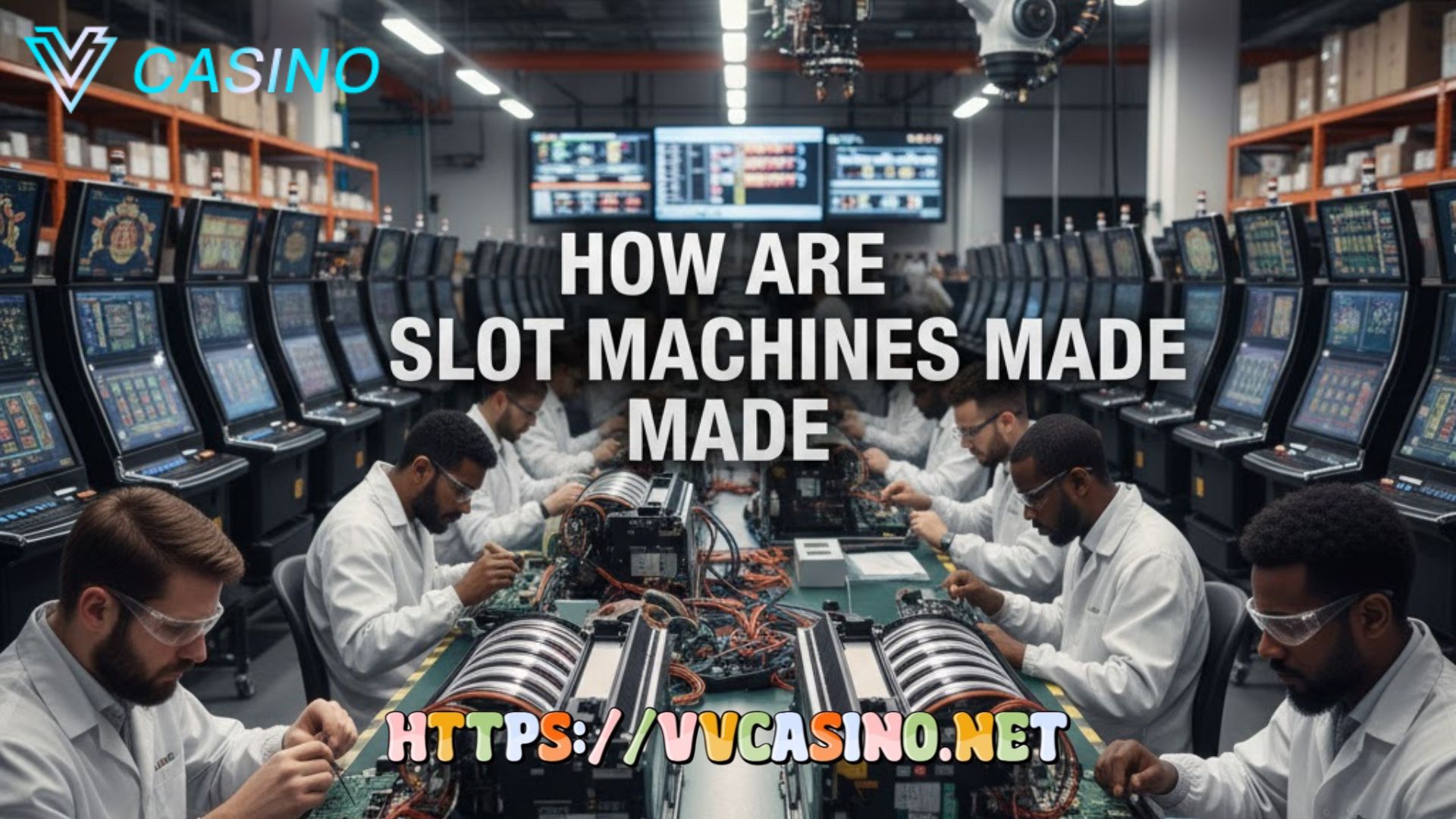
While online slots are digital, land-based slot machines require real hardware. Manufacturing involves both electronic engineering and mechanical craftsmanship.
Cabinet: The physical housing made from steel or aluminum.
Display Screens: LCD or OLED monitors for visuals.
Button Panel / Touchscreen: For player input.
Ticket Printer: Prints winning slips (TITO system).
Coin & Bill Acceptors: Recognize various currencies.
Sound System: Provides immersive audio.
Top casino equipment manufacturers like IGT, Aristocrat, and Konami Gaming produce thousands of cabinets each year, combining durability with luxury design.
Every slot machine must comply with strict government regulations. In regions like Malaysia, only licensed operators can host or distribute slot games, even online.
Regulators review fairness reports, RNG certifications, payout disclosures, and game security protocols. Compliance ensures player protection, responsible gaming, and the integrity of the industry. Online casinos like Trusted Casino Online Malaysia also implement KYC (Know Your Customer) and AML (Anti-Money Laundering) systems to stay legally compliant.
Once approved, slot machines are installed in casinos or uploaded to online gaming servers.
The machine is connected to a casino management system (CMS). All transactions and spins are tracked in real time. Maintenance teams monitor performance.
Games are integrated via iGaming platforms or APIs. Payment systems handle deposits and withdrawals. Casinos manage bonuses, promotions, and player analytics. Integration ensures a seamless experience between live casino games, slot systems, and digital payment gateways.
After launch, developers continue to monitor slot performance and player behavior. They use AI-driven analytics to track which games perform best and which need updates.
Optimization includes adjusting bonus frequency, enhancing mobile responsiveness, improving loading times, and adding seasonal or festive versions (e.g., Christmas editions). This ongoing improvement keeps players engaged and loyal to platforms like Mobile Slot Malaysia or Casino Bonus Malaysia.
Slot machines are not just about chance — they’re built on psychological principles. Every light, sound, and animation is designed to trigger a positive emotional response.
Near Miss Effect: Players see almost-winning combinations to stay motivated.
Variable Rewards: Randomized wins create anticipation.
Sensory Feedback: Lights and sounds enhance excitement.
Player Control Illusion: Buttons give a sense of agency even though outcomes are random.
Game developers blend these techniques with RNG systems to ensure fairness while maximizing engagement.
In today’s gaming landscape, most slot machines are developed for both physical and mobile formats. Developers use responsive frameworks so players can enjoy the same quality experience on Android, iOS, and desktop. Platforms like Pussy888, Mega888, and 918Kiss have become leaders in mobile slot Malaysia markets.
This adaptation also allows casinos to run progressive jackpots across both physical and online systems — linking thousands of machines globally.
The future of slot machines is shaped by AI, VR, and blockchain technology.
AI-Personalized Slots: Adjust themes and volatility to player behavior.
VR Slots: Create 3D immersive casino environments.
Blockchain Integration: Offers transparent RNG validation.
Skill-Based Slots: Mix traditional luck with interactive gameplay.
The RNG software is not only internally audited by the leading slot machine manufacturer but must also be submitted to independent third-party gaming laboratories (like GLI or BMM) for rigorous testing and certification. These labs verify that the algorithm is statistically unpredictable, unbiased, and adheres to the legislated Return to Player (RTP) percentage over millions of simulated spins, ensuring strict regulatory compliance.
Volatility, which is determined by the machine's game mathematics, dictates the risk profile. High-volatility slot machines are designed to pay out less frequently but offer the potential for very large jackpot prizes, while low-volatility machines provide more frequent, smaller wins, offering a longer, more stable playing experience.
Cabinet fabrication typically uses heavy-gauge steel for the main frame and high-impact polycarbonate or tempered glass for the display and button panels. Steel is chosen for its durability, security, and resistance to tampering, which is a critical part of the machine's overall security features and longevity in a commercial casino environment.
While purely mechanical reels are obsolete, many popular machines still incorporate electromechanical components. They use precision-controlled stepper motors to spin and stop physical or hybrid reels, but the final outcome for the spin is always determined electronically by the RNG and the core firmware programmed into the main circuit board.
The bill acceptor and cash handling systems are highly sophisticated peripherals equipped with advanced sensors (magnetic, optical, and UV) to instantly verify the authenticity of currency and tickets. These devices are integrated with the machine's central game logic to lock up or flag suspicious transactions, significantly enhancing the machine's internal security features.
The microprocessor is the machine's central processing unit, mounted on the main circuit board. Its primary function is to execute the core firmware and game logic, process the output from the Random Number Generator (RNG), control the display and peripherals, and continuously monitor all operational and security features.
Return to Player (RTP) is the theoretical percentage of all money wagered that a slot machine is mathematically designed to pay back to players over its lifetime. It is predetermined by the game mathematics model, set in the firmware, and is legally verified by regulators to ensure it meets minimum jurisdictional standards for fairness.
The manufacturing process involves four key phases: 1) Conception and Design (Game Math, RNG, Software), 2) Hardware Engineering (Cabinet Fabrication, Electronic Design), 3) Assembly (Wiring, Component Integration), and 4) Testing and Certification (Regulatory Compliance, Quality Assurance).
Slot machine outcomes are made truly random through a continually running, specialized algorithm called the Random Number Generator (RNG). This algorithm generates non-repeating numerical sequences independent of play, time, or previous results, ensuring the integrity of the game's game logic before a spin is even initiated.
Server-based gaming (SBG) is an emerging architecture where the actual games, firmware, and often the RNG reside on a central casino server rather than within the individual machine's microprocessor. This allows operators to change games, themes, and RTP settings on the fly across their floor from a single centralized control system.
Typically, a slot game takes 6–12 months to develop from concept to release, including design, coding, testing, and certification.
Yes. Modern slot machines use certified RNG algorithms that guarantee each spin is independent and fair.