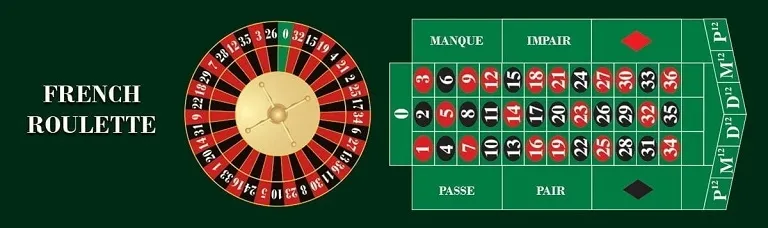
French Roulette
French Roulette is widely recognized among experienced bettors and online casino enthusiasts as the superior version of the classic wheel game. While sharing the same fundamental mechanics as European Roulette, the subtle but critical inclusion of special rules—La Partage and En Prison—significantly reduces the house edge, giving players the best possible odds in the entire roulette category. This comprehensive guide will meticulously detail the unique French Roulette rules, explain the distinct French betting layout and terminology, and explore the French Roulette strategy necessary to capitalize on this highly favorable variant for securing a better Return to Player (RTP) and increasing the chances of a big win.
French Roulette vs. European and American Variants
Understanding the distinctions between the three major roulette types is the starting point for any intelligent betting strategy. French Roulette is mathematically superior due to its wheel and its unique rules.
The Single-Zero Wheel
Both French Roulette and European Roulette utilize the single-zero wheel, which features 37 pockets: numbers 1 through 36 (alternating red and black) and a single green zero pocket.

-
European/French House Edge: The single-zero wheel results in a base house edge of 2.70% for all bets. This is calculated as 1/37 (the probability of hitting the zero) multiplied by 100.
-
American Roulette: This variant features 38 pockets (1-36, 0, and 00—the double-zero pocket). This extra pocket nearly doubles the house edge to 5.26%, making it the least favorable option for players.
The single-zero design is the first reason why players should always prioritize French Roulette or European Roulette over the American version.
The Special Rules: La Partage and En Prison
The core advantage of French Roulette lies in its two special rules, La Partage and En Prison, which apply specifically to even-money bets (Red/Black, Odd/Even, 1-18/19-36). These rules are what reduce the house edge from 2.70% to a staggeringly low 1.35% on those specific wagers, offering the highest RTP available in roulette.
La Partage Rule
La Partage (French for "The Sharing") is the most common and beneficial of the two rules.
-
Application: If a player places an even-money bet and the ball lands on the single zero pocket, the player only loses half of their original stake. The other half is returned to the player.
-
House Edge Reduction: This rule essentially halves the casino's advantage on even-money bets from 2.70% to 1.35%. This is why French Roulette is the optimal choice for players who favor low-volatility, low-risk outside bets.
En Prison Rule
En Prison (French for "In Prison") is a variation often offered in conjunction with or as an alternative to La Partage.
-
Application: When the ball lands on zero, the player's even-money bet is not immediately lost but is imprisoned (left on the table) for the next spin.
-
Resolution: If the subsequent spin is a winner for the imprisoned bet, the original stake is returned to the player (the bet is "released"). If the bet loses on the subsequent spin (including hitting zero again in some casinos), the entire stake is forfeited to the house.
-
Strategic Value: The En Prison rule yields the same theoretical 1.35% house edge as La Partage. It appeals to players who prefer the chance to recover their full stake rather than guaranteeing the return of half.
French Roulette Table Layout and Terminology
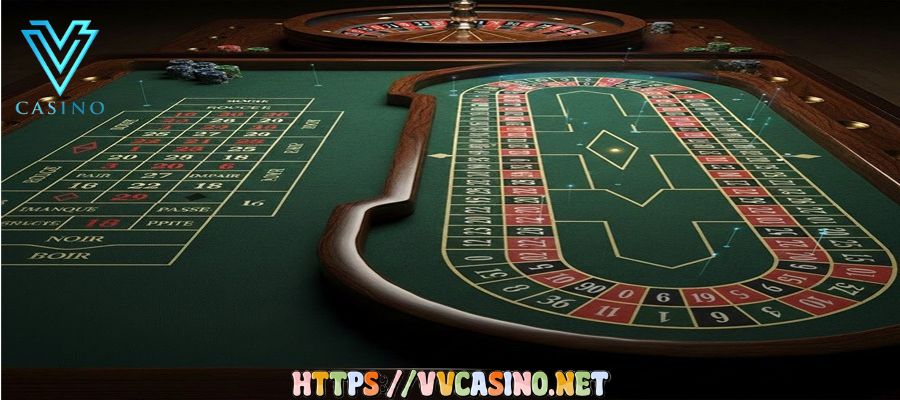
While the betting options are identical to European Roulette, the French betting layout has a distinctive appearance and uses French terminology, which can initially confuse new players.
The Table Layout
The main betting grid for the inside bets (Straight Up, Split, Street, etc.) is the same as the European variant. However, the outside bets sections are typically placed on both sides of the main number grid, and all labels are in French.
-
Rouge/Noir (Red/Black): The even-money bet on color.
-
Pair/Impair (Even/Odd): The even-money bet on parity.
-
Manque/Passe (Low/High): The even-money bet on 1-18 (Manque) or 19-36 (Passe). Manque means "failed" or "missed," referring to the low numbers.
-
Douzaine: Bets on the Dozens (P12, M12, D12 for Premier, Moyenne, Derniere—First, Middle, Last Dozen).
-
Colonne: Bets on the Columns.
Call Bets (Announced Bets)
A unique feature of French Roulette is the use of Call Bets or Announced Bets. These bets cover specific sections of the French Roulette wheel and are typically placed in a dedicated area called the racetrack layout, which mirrors the actual sequence of numbers on the wheel. These are complex inside bets that require multiple chips.
-
Voisins du Zéro (Neighbors of Zero): Covers the 17 numbers closest to the zero pocket (22, 18, 29, 7, 28, 12, 35, 3, 26, 0, 32, 15, 19, 4, 21, 2, 25). This bet requires 9 chips placed in various splits, corners, and a trio.
-
Tiers du Cylindre (Thirds of the Wheel): Covers the 12 numbers roughly opposite the zero (27, 13, 36, 11, 30, 8, 23, 10, 5, 24, 16, 33). This bet requires 6 chips placed on various splits.
-
Orphelins (Orphans): Covers the 8 numbers not included in the two above bets (1, 6, 9, 14, 17, 20, 31, 34). This bet requires 5 chips.
-
Jeu Zéro (Zero Game): A smaller version of Voisins du Zéro, covering the 7 numbers closest to and including zero (12, 35, 3, 26, 0, 32, 15). This requires 4 chips.
These Call Bets do not reduce the house edge but are a way to cover a large segment of the wheel with a minimal number of chips, appealing to players employing a complex French Roulette strategy.
French Roulette Strategy: Maximizing the Low House Edge
The optimal French Roulette strategy is entirely focused on leveraging the low 1.35% house edge offered by the La Partage and En Prison rules.
Prioritize Even-Money Bets
For any player prioritizing maximizing their odds and achieving a high Return to Player (RTP), all focus should be placed on the even-money bets: Red/Black, Odd/Even, and High/Low. These are the only wagers where the house edge is halved from 2.70% to 1.35%.
Progression Systems on Outside Bets
Due to the significantly reduced house edge, the low-risk nature of even-money bets makes them the only rational choice for applying progressive betting systems, such as the Martingale Strategy or the Fibonacci System.
-
Martingale: Doubling your bet after every loss to recover all previous losses and gain one unit profit upon winning. While flawed due to table limits and bankroll constraints, the lowest possible house edge of 1.35% makes this system marginally more viable than on any other roulette variant.
-
Paroli/Reverse Martingale: A less risky system where you double your bet after a win, aiming to capitalize on short winning streaks.
It is crucial to remember that no betting system can eliminate the house edge. French Roulette strategy simply gives you the best mathematical foundation to play.
Inside Bets: High Payout, Higher Edge
All inside bets (Straight Up, Split, Street, etc.) in French Roulette maintain the standard 2.70% house edge because the La Partage and En Prison rules do not apply to them. They offer higher payouts (up to 35:1 for a Straight Up bet) but come with double the casino's advantage. These are high-volatility bets suitable for players chasing a large, immediate big win rather than optimizing long-term RTP.
Conclusion: Why French Roulette is the Best Choice
For discerning players of casino games, the choice is clear: French Roulette is mathematically the superior variant. The combination of the single-zero wheel (base 2.70% edge) and the special rules of La Partage and En Prison (reducing the edge to 1.35% on even-money bets) provides the best odds in the entire category. A successful French Roulette strategy involves focusing on these even-money bets, managing your bankroll responsibly, and recognizing that while the game is one of chance, choosing the wheel with the lowest house edge is the most intelligent move a player can make to secure a better Return to Player (RTP).
FAQ
The main difference is the special rules. Both use the single-zero wheel (2.70% base house edge), but French Roulette incorporates the La Partage and/or En Prison rules, which halve the house edge on even-money bets to 1.35%, a benefit typically not found in standard European Roulette.
The La Partage rule is highly beneficial for the player because if the ball lands on zero after an even-money bet is placed, the player is returned half of their stake. This action effectively halves the casino's advantage on that specific category of bets.
No, these special rules apply only to even-money bets, which include Red/Black, Odd/Even, and High/Low (Manque/Passe). They do not apply to inside bets like Straight Up, Split, or the Call Bets, all of which retain the standard 2.70% house edge.
The French term for betting on the low numbers (1-18) is Manque. The term for betting on the high numbers (19-36) is Passe. These are both even-money bets covered by the La Partage rule.
The best French Roulette strategy involves maximizing play on the even-money bets (Red/Black, etc.) because they offer the lowest house edge of 1.35%. This makes them the most mathematically sound wagers for any progressive or flat betting system designed to maximize the RTP.
The French Roulette house edge is dramatically lower. For even-money bets using the La Partage rule, the edge is 1.35%. American Roulette, with its double-zero wheel, has a fixed house edge of 5.26% on all bets. This is nearly four times higher than the French variant.
he Voisins du Zéro Call Bet covers 17 numbers that are clustered around the single-zero wheel pocket. It is the largest of the announced bets and typically requires 9 chips placed in a specific configuration to cover numbers from 22 on one side of the zero to 25 on the other.
No, both the En Prison rule and the La Partage rule result in the exact same theoretical Return to Player (RTP) and, therefore, the same lowest house edge of 1.35% on even-money bets. The difference is purely in the gameplay experience—whether the player takes half their money back immediately or risks the full stake for a chance to recover the whole amount on the next spin.
The distinctiveness comes from the French betting layout's labeling (using French terms like Rouge, Pair, Manque) and the arrangement of the outside bets (often split on both sides of the main grid). Furthermore, the inclusion of the racetrack for Call Bets is a common visual marker.
A player using a progressive system like Martingale must choose French Roulette because the low 1.35% house edge on the even-money bets (where Martingale is applied) minimizes the rate at which the casino siphons away the bankroll. Using Martingale on the American wheel (5.26% edge) drastically accelerates losses, making the system unsustainable much faster.